…accomplice
cops
plea
deal
The
first
local
murder
trial
that
utilized
the
Plea
Bargain
Act
of
2010
ended
yesterday
with
accused
Burt
Lancaster
being
sentenced
to
death
for
the
April
2006
murder
of
taxi
driver
Deonarine
Sookdeo
by
Justice
Dawn
Gregory.
Despite
stringent
argument
and
a
constitutional
motion
by
defence
attorney
Basil
Williams,
the
jury
returned
a
unanimous
guilty
verdict
after
a
relatively
brief
deliberation.
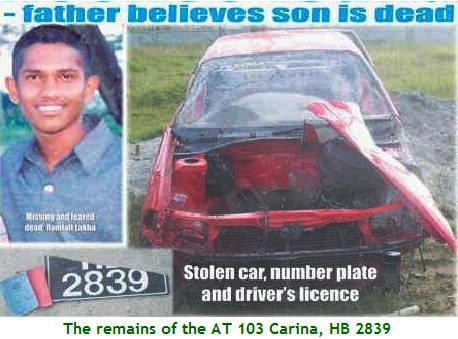
Deonarine’s
badly
decomposed
body
was
discovered
in
a
remote
area
off
the
Soesdyke/Linden
Highway
days
after
he
went
missing.
His
car
which
was
stripped
of
valuable
parts
had
earlier
been
found
in
the
said
area.
 Ramlall-Lakha-Father
Cops on bail for robbing Brazilian
Ramlall-Lakha-Father
Cops on bail for robbing Brazilian
Four
persons
were
initially
charged
for
his
murder
and
two
were
subsequently
set
free.
The
jury
based
their
conclusion
on
the
evidence
given
by
star
witness
Daywan
Kawal
called
‘Avinash’
who
was
initially
charged
along
with
Lancaster
for
the
taxi
driver’s
murder.
Murder
accused
Daywan
Kawal
entered
a
plea
bargain
and
turned
chief
witness
for
the
state.
However,
Kawal
pleaded
guilty
to
the
lesser
count
of
manslaughter
and
received
a
seven
year
sentence
in
exchange
for
his
testimony
against
his
co-accused
Lancaster
called
‘Moses’.
This
was
shortly
after
the
Plea
Bargaining
Act
was
passed
in
the
National
Assembly.
Defence
counsel
for
Lancaster,
Williams
had
earlier
moved
to
the
High
Court
seeking
a
Conservatory
Order
to
halt
his
trial.
Chief
Justice,
Ian
Chang,
had
dismissed
the
application
but
granted
Defence
Counsel
the
right
to
a
constitutional
motion
to
determine
whether
his
client’s
constitutional
right
to
a
fair
trial
was
contravened
by
what
transpired
during
a
plea
bargain
arrangement.
Counsel’s
contention
was
that
his
client,
Burt
Lancaster,
and
three
others
were
charged
with
murder
and
the
offence
was
“murder
or
nothing.”
However,
at
trial,
his
client
found
that
during
a
plea
bargaining
arrangement,
of
which
he
was
not
consulted,
two
of
the
accused
were
freed,
and
the
fourth,
Kawal,
was
allowed
to
plead
guilty
to
manslaughter.
Williams
had
argued
that
Kawal,
who
was
given
a
“light”
sentence,
had
been
made
a
witness
for
the
State
in
the
matter
in
which
he
was
an
accused.
Both
Kawal
and
Lancaster
had
given
caution
statements
to
the
police
in
which
they
described
how
the
taxi
driver
was
killed.
Answering
cross-examination
by
Attorney-at-Law
Williams,
Kawal
testified
that
he
had
given
three
statements
to
the
prosecution
—
the
first
was
given
in
2006,
the
second
on
the
same
day,
and
the
third
was
given
in
2011
when
he
benefited
from
the
plea
bargaining
arrangement.
In
his
first
statement,
the
witness
had
said
that
he
and
the
accused
Burt
Lancaster,
had
decided
to
rob
taxi
driver
Deonarine
Sookdeo,
but
that
Lancaster
was
the
one
who
had
knifed
Sookdeo
in
the
belly.
Kawal
however
admitted
that
there
was
an
error
in
this
first
statement,
and
when
asked
to
explain
this
mistake,
he
declared
that
both
he
and
Lancaster
had
stabbed
Sookdeo
in
the
belly,
causing
him
to
die.
Kawal
admitted
that
the
accused
Lancaster,
stammered
horribly,
making
it
unlikely
for
him
to
carry
on
a
conversation
in
comfort;
but
he
claimed
that
that
does
not
cause
Lancaster
much
problem.
In
answer
to
lead
prosecutor
Konyo
Sandiford,
in
her
examination
in
evidence-in-chief,
Daywan
Kawal
revealed
how
he
had
agreed
with
Lancaster
to
rob
the
taxi
driver
and
wound
him
with
a
knife.
Kawal
stood
up
well
to
rigorous
cross
examination
which
also
centered
around
his
motive
for
entering
into
the
plea
deal
in
exchange
for
a
light
sentence.
Kawal
had
accepted
from
questions
in
the
cross-examination
that
it
was
clear
to
him
that
the
accused
Lancaster
would
be
severely
dealt
with,
and
that
he
was
prepared
to
give
evidence
against
Lancaster
because
of
the
benefit
he
derived
from
the
plea
bargain
arrangement.
Konyo
Sandiford
and
Diana
Kaulesar
represented
the
State
in
the
matter
and
they
responded
strongly
to
the
closing
submissions
made
by
the
defence
counsel,
swaying
the
jury
in
the
process.
During
the
trial,
Lancaster
had
an
opportunity
to
plead
to
the
lesser
count
of
manslaughter
but
he
chose
to
bite
the
bullet
and
seek
acquittal
on
the
capital
offence.
When
asked
what
he
had
to
say
before
the
sentence
was
handed
down,
Lancaster
stuttered
a
bit
and
appeared
to
be
pretending
that
he
could
not
speak.
After
considering
all
the
evidence
Justice
Gregory
ruled
that
Lancaster
face
the
gallows.
It
is
not
clear
if
Lancaster
will
appeal
the
verdict.
Thursday, March
15,
2012




